
September 18, 2026

clear plastic cup with red liquid inside
Home Improvement

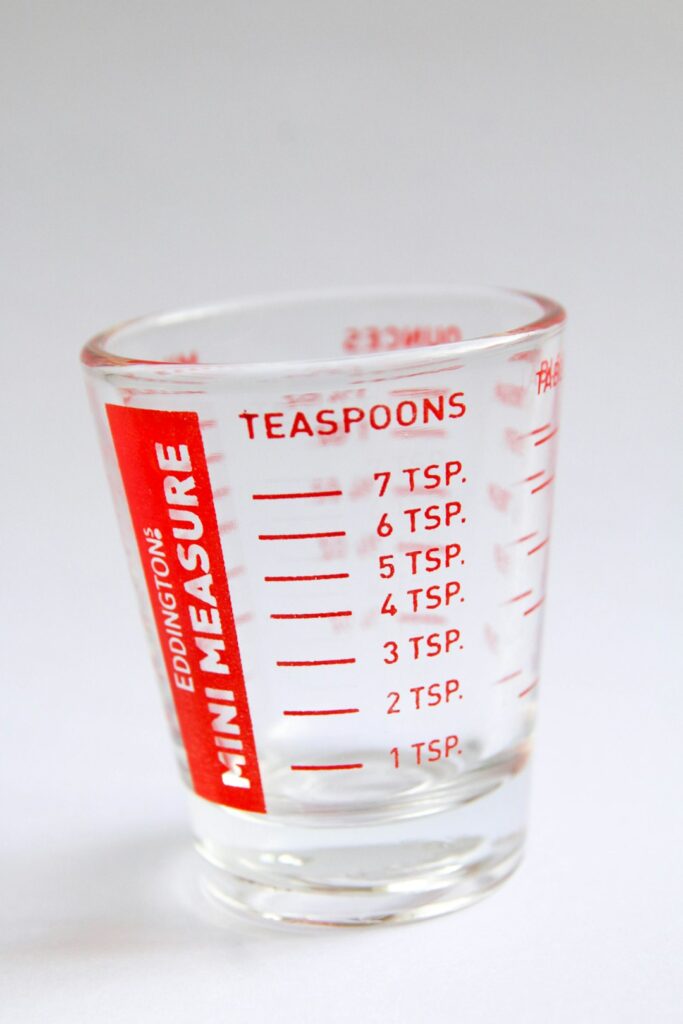
How Measurement Spoons and Cups Work

A measurement spoon or cup does more than provide a convenient shape for pouring. Its graduations connect a stated quantity with a repeatable volume, which matters when a product label specifies a dilution ratio. A mismatched kitchen spoon can hold noticeably more or less than the amount assumed by the instructions. Start by identifying the required quantity, then use a marked utensil or vessel that covers that range. Spoons suit small additions such as concentrate or powdered cleaner. Cups and pitchers provide better control for water and other larger portions, especially when the finished batch must be mixed in one container. Read the units before filling anything. A marking may refer to milliliters, liters, US fluid ounces, cups, tablespoons, or teaspoons, and those labels are not interchangeable. A fluid ounce measures volume; an ounce used for a solid commonly refers to weight. The same number therefore does not guarantee the same amount. In US customary references, a tablespoon is approximately 14.8 milliliters, although product instructions may use rounded conversions. If a label calls for 250 mL and the available vessel is marked only in fluid ounces, consult a dependable conversion reference rather than treating the nearest line as an exact match. The vessel should fit the batch as well as the amount. A teaspoon or tablespoon is practical for a small dose of concentrate, while a marked cup can handle a moderate quantity of water without repeated refilling. For a one-liter dilution, a pitcher with a stable handle and visible graduations is generally easier to control than a small cup. Resources covering a measurement spoon and cup can help compare formats, capacities, and pouring features before a routine is established. A vessel that stands securely on a work surface also leaves both hands available for opening containers or stirring. Liquid level matters as much as the printed scale. In a transparent vessel, water-like liquids usually form a shallow meniscus, or curved surface, against the walls. Set the lowest part of that curve at the intended mark and bring your eyes level with it. Viewing from above or below can create parallax, making the liquid appear aligned when it is not. Place a larger cup or pitcher on a level bench rather than holding it in midair. Fill slowly during the final portion, because a fast stream can overshoot a narrow graduation before the surface settles. Not every liquid presents a clean, easy-to-read surface. Foam can hide the actual level, while dark, colored, or opaque mixtures may obscure the graduations altogether. Pause briefly after pouring so bubbles can break, and use the vessel’s transparent side only if the liquid remains visible. A spoon should be filled to its stated capacity without a raised dome or spillover unless the instructions specify another technique. Wipe the outside before setting it down. A film or drip can contaminate a work surface and may also fall into the next container, changing its concentration. Measurement marks indicate a target, not unlimited precision. The actual volume can be affected by residue, liquid clinging to the utensil, worn or unclear graduations, and the way the vessel is held. Household cleaning may tolerate modest variation, but repeated workplace preparation deserves a more controlled process. Record the size of the tool used on the batch sheet or work instruction, inspect the markings before starting, and replace a measure that has become cloudy or difficult to read. If the procedure calls for verified accuracy, use equipment checked for that purpose rather than assuming that two vessels marked with the same capacity perform identically. Material compatibility must be checked before a measure contacts a substance. A container suitable for water may not tolerate concentrated chemicals, oils, solvents, or high temperatures. The wrong material can soften, crack, swell, stain, or retain residue that is difficult to remove. Read the product label, safety information, and manufacturer instructions for both the substance and the vessel. Keep food utensils out of chemical work, even after washing. In a janitorial area, storing a dedicated pitcher and small dose measure together prevents someone from grabbing a kitchen spoon during a rushed refill and reduces the chance of carrying chemical residue into food preparation. Before mixing, inspect the label for the required final volume, dilution order, and any temperature or handling directions. Set the larger vessel flat, add the measured water or other base liquid, and introduce the concentrate with the smaller measure if the instructions use separate quantities. A worker who marks the batch container or notes the remaining concentrate before starting can avoid repeating a measurement after an interruption. Keep the spout pointed away from hands and nearby surfaces, and clean, rinse, or dispose of the equipment according to the substance guidance. For larger batches, chemical volume measurement equipment may include compact measures or pitchers that reach several liters, but the operating habits remain the same: verify the unit, read the level correctly, and control the pour.

girl reading book
IT

Intensive Reading Support Builds Skills

A child may read a familiar sentence smoothly at school and then guess through an unfamiliar book at home. That change can leave adults wondering about effort, attention or confidence. A more useful question is which part of reading has not become secure. The difficulty may involve hearing sounds in words, connecting letters with sounds, blending a word, reading fluently or understanding what has been read. Intensive intervention starts with that distinction. It uses focused teaching and carefully selected practice rather than simply adding another worksheet or asking a child to spend longer with a book. Phonemic awareness is the ability to notice and manipulate the separate sounds in spoken words. Phonics teaches the relationship between those sounds and written letters or letter groups. Decoding is the act of applying that knowledge to an unfamiliar word. Fluency combines accurate reading with a suitable pace and phrasing, while comprehension concerns meaning. These skills overlap, but they are not interchangeable. A pupil who can explain a story may still need direct phonics teaching, and a pupil who reads every word correctly may need help with vocabulary or sentence meaning. For families considering intensive reading intervention australia, identifying the specific gap is a sensible first step. Suppose a Year 2 pupil can read most short words but hesitates over shouted, bright and careful. An assessment might show secure knowledge of common consonant sounds alongside weaker knowledge of vowel patterns, suffixes or longer word structures. Teaching can then target those features directly. The practitioner may model how to split a word into useful parts, have the child blend the parts aloud, and record which errors occur without prompting. Short passages containing the taught patterns provide a controlled place to practise. The purpose is not rote memorisation of a private list. It is to establish a method the child can use with a word that has not appeared before. The word intensive does not necessarily describe long sessions or daily specialist appointments. Intensity is better judged by the precision of the teaching, the frequency of practice, the match between the lesson and the assessed need, and the speed of response when progress is limited. A focused fifteen-minute session may be more productive than a tired hour of loosely structured work. A written plan should name the skill, the person responsible, the materials, the session schedule and the measure used to review progress. A small practical habit helps: staff can check the previous session record before teaching, so the next lesson begins with evidence rather than memory. Older pupils may present a different profile. A Year 5 student could read short words accurately yet lose the meaning of a science paragraph because recognition is slow, vocabulary is thin or unfamiliar word parts are blocking access. Morphology, the study of meaningful units such as un, help, ful and tion, can connect related words and support word knowledge. Instruction might also include phrase-by-phrase reading, repeated reading of a suitable passage and discussion of technical terms before the pupil reads independently. Comprehension should be taught directly through questions, explanation and retelling. Accurate word reading does not guarantee that a pupil has understood the text. Assessment should provide more than a reading age or a percentage score. During a session, a practitioner can mark the exact word where an error occurred, note whether the pupil used a letter pattern, ask what a word means and compare silent reading with reading aloud. A brief review of spelling and writing can reveal whether the same pattern causes difficulty in another task. These observations form a working explanation of the barrier; they should not become a permanent label. Progress checks need to occur often enough to guide teaching. If the same errors persist, the practitioner might reteach a prerequisite, change the explanation, reduce the amount of text or request another assessment. A school also needs an implementation plan that works beyond one enthusiastic teacher. Training may involve a workshop, programme-specific instruction, supervised practice or independent study, and each format serves a different purpose. A course can introduce a teaching sequence, while supervision can examine an actual lesson and identify a manageable adjustment. Planning should account for room availability, staff cover, record keeping and communication with families. One useful document is a shared intervention log showing the target skill, words or text used, pupil response and next step. That record reduces rework when a pupil changes teacher and helps classroom staff connect intervention practice with ordinary lessons. Schools seeking literacy intervention planning should compare any approach with their own assessment information, curriculum and support arrangements. Intensive support should sit alongside good classroom teaching unless a qualified team has a clear reason to alter that arrangement. Families can ask which skill is being taught, what the child is expected to do during practice, how mistakes will be handled and when the plan will be reviewed. They can also ask how useful information will be shared with the classroom teacher, because inconsistent instructions can make a new strategy harder to apply. A sensible programme may change its pace or content as the child responds. Improvement comes from accurate diagnosis, explicit teaching, regular opportunities to practise and decisions based on the pupil’s actual reading, not on assumptions about effort.

Scroll to Top